











Racial justice event looks to the future
As part of its yearlong Bicentennial celebration, St. Peter’s will host a racial justice event Saturday, March 26, beginning with Mass at 5 p.m. in the church, followed by a simple meal and discussion in the hall led by Msgr. Raymond East, pastor of St. Teresa of Avila Parish in Southeast DC.
“This year we have been remembering the ‘living stones’ that built this parish before us, and praying for them,” said Fr. Gary Studniewski, our pastor. “Sadly, some of our former parishioners were not treated with the dignity that was their due because of racial differences. I am hoping that this event will acknowledge that history, but also look forward to what we can build together as today’s living stones.”
Organizers on the Bicentennial Events subcommittee said “Building with Living Stones -- An Architecture for the Future” is intended to “promote an encounter between parishioners” of several District parishes, and “discuss ways of building a future that celebrates our diversity and encourages us to perform our Christ-centered mission in concert with one another.”
Fr. Gary said he invited several DC pastors to attend, pastors whose churches have had a historical or more recent connection to St. Peter’s.
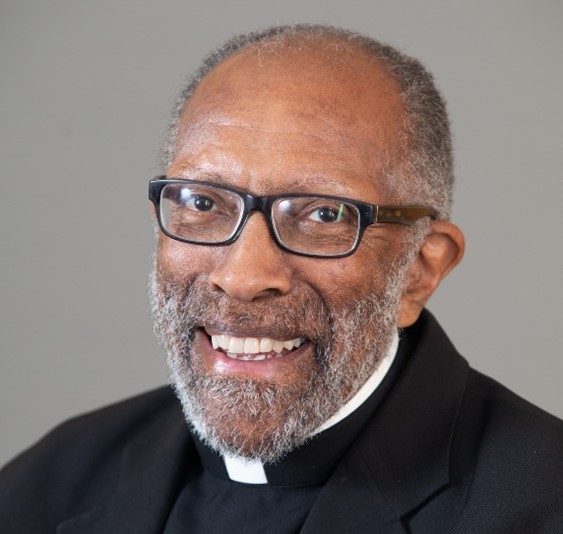 Msgr. East is a well-known speaker in the U.S. Catholic Church. According to a Catholic Standard interview last August marking the 40th anniversary of his ordination, he has spent most of his priestly ministry serving Washington parishes, as parochial vicar at the Shrine of the Sacred Heart, St. Anthony’s, and Holy Comforter-St. Cyprian’s, and as pastor at St. Teresa of Avila (twice) and Nativity parishes.
He also served as the Archdiocese of Washington’s vicar for evangelization and director of the Office of Black Catholics.
In the Standard story, he said, “I try to encounter Jesus every day and renew that encounter and share Jesus with others.”
Msgr. East “will offer some glimpses of the history of our local church: times when we have allowed our differences to hide the truth of the dignity of every human person, e.g., differences in race or ethnicity, and some success stories about advancing justice for all,” said the announcement of the event.
For St. Peter’s, that history included racial segregation from its founding until 1948, when Archbishop (later Cardinal) Patrick O’Boyle ended the practice in the newly created Archdiocese of Washington.
In St. Peter’s first church (1821-1889), African-Americans, both enslaved and free, were required to sit in a gallery that ran along the structure’s second level. In its second church (1890-1940), African-American parishioners had to sit in the back pews.
Longtime parishioner Georgiana Barnes, who died in 2012, confirmed that segregation persisted in St. Peter’s third church, which opened in 1941, until Archbishop O’Boyle ended it.
Mrs. Barnes began attending St. Peter’s in the 1930s, she recalled in a 2003 interview with the Overbeck Capitol Hill History Project. She said: “St. Peter’s was like all the rest of the churches. We had three seats [pews] in the back on the Blessed Mother’s side that we could sit in. … Three seats. And if those seats were filled you stood up in the back of the church.”
Everyone is invited to the March 26 Mass, supper, and discussion. Please RSVP by March 23 online at bit.ly/StPeterLivingStones, or by calling the rectory at 202-547-1430.