











How Well Do You Know Your Parish?
In January, we challenged you to identify a random selection of details of the interior of St. Peter’s. Now try naming these features of the outside of the church and the surrounding grounds. Answers below.
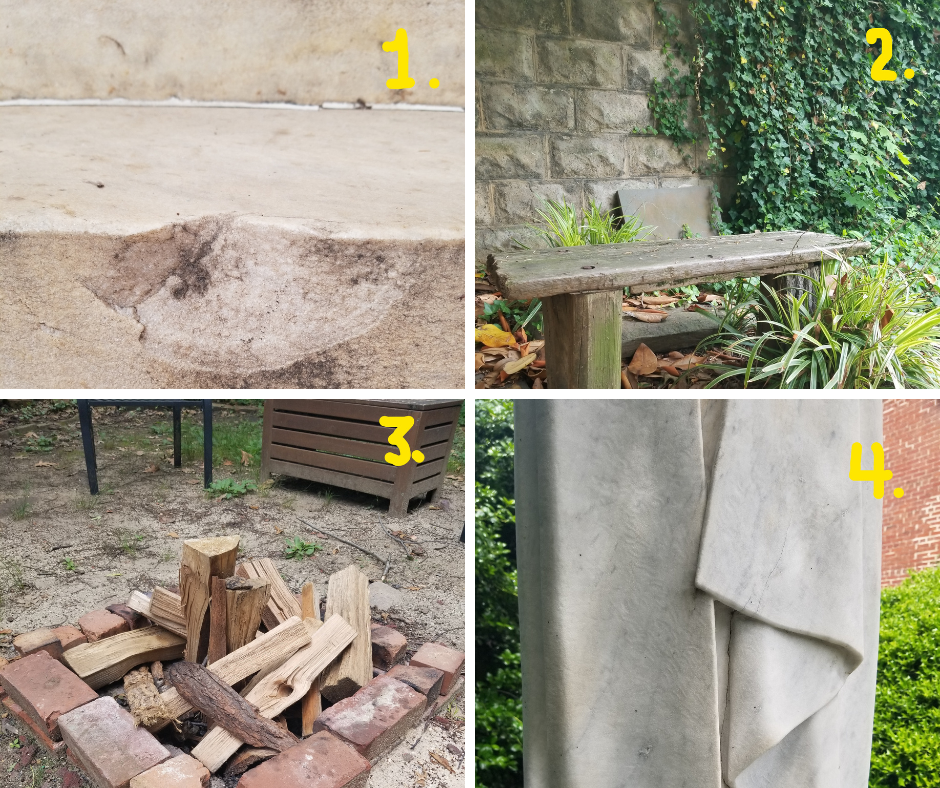
- A gouge in the church steps caused when the stone cross toppled off the roof in the 2011 earthquake.
- Bench in the side garden on C Street placed by a parishioner as a memorial to his deceased daughter.
- Fire pit behind the church in the newly christened Holy Family Garden.
- Detail of the robe on the Blessed Virgin statue in the Mary Garden.
- Simon Peter, fisherman, in the relief above the left-hand front door.
- Lamp above the entrance to the elevator hallway.
- Stone cross, part of the memorial in the side garden on C Street.
- St. Peter’s hand clutches the keys to the kingdom in the statue on the bell tower (currently blocked by the scaffolding).
Ministry Fair highlights social justice opportunities
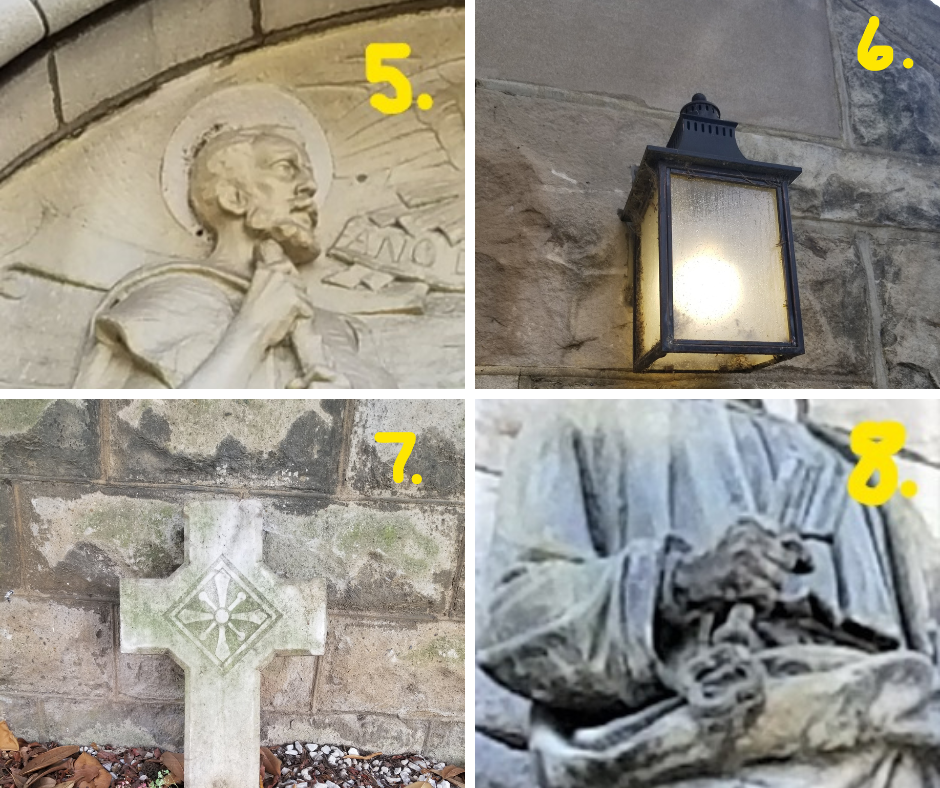
The parish's Social Justice Initiative held a Ministry Fair in the church backyard on June 5.
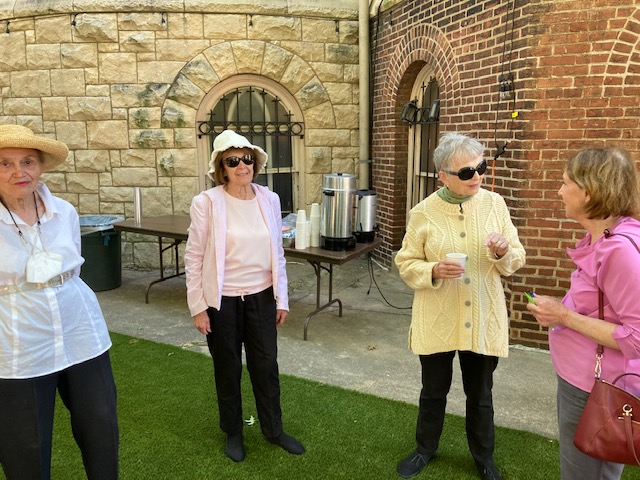
Bicentennial Block Party!
The Consummate Pastor: Rev. Michael J. O’Sullivan (1970-2005)
He had a sly grin and an Irish brogue, charms he was not above deploying in service of persuading a parishioner to “volunteer” for something. At the same time, he understood that lay people could be a help to him in running the parish, and he gave them the space to do it. He made it his business to know everyone, and he didn’t wait for you to come to him – he came out to meet you. Fr. Michael O’Sullivan was the consummate parish priest.
D-Day Prayer at St. Peter’s
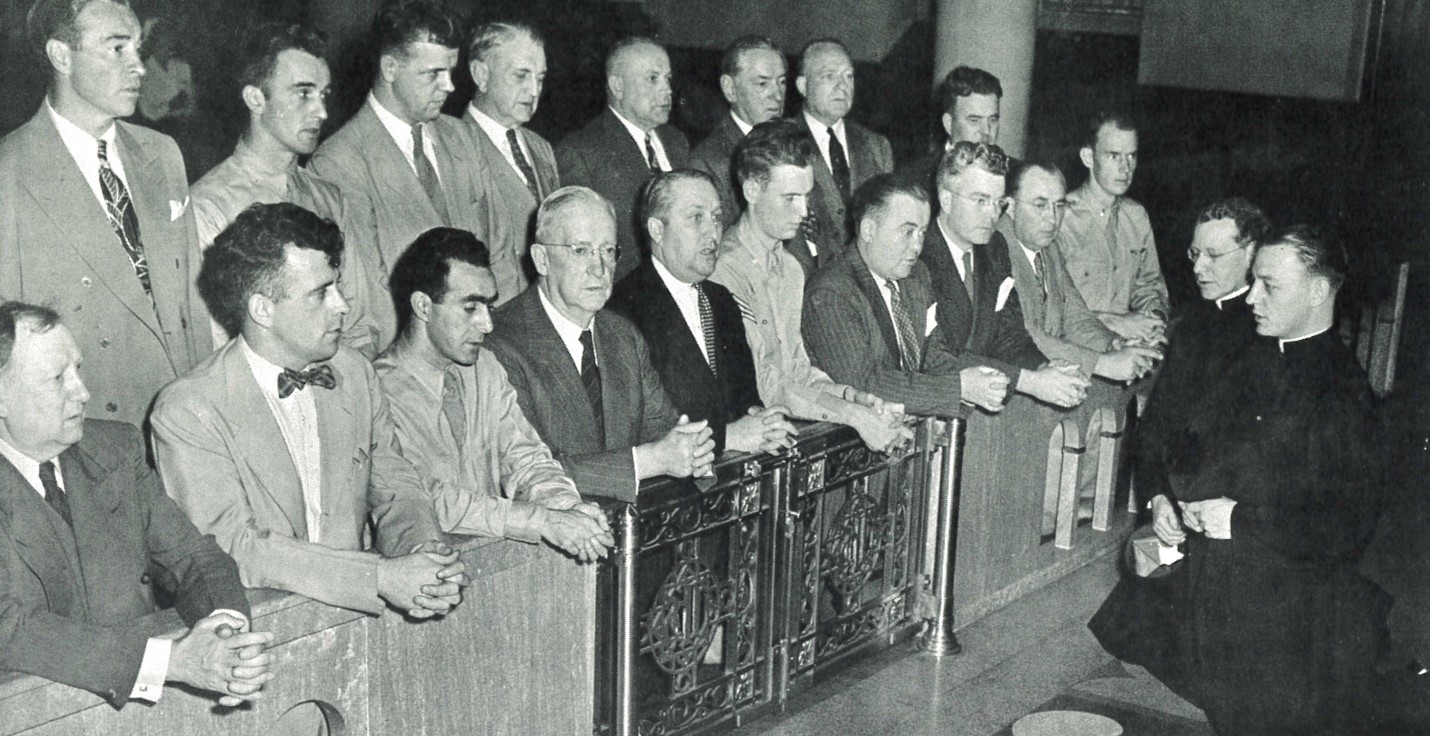
Members of Congress gather along St. Peter’s communion rail on June 6, 1944, to pray for the success of D-Day, the invasion of German-occupied Western Europe by Allied forces in World War II. Under the overall command of U.S. Gen. Dwight D. Eisenhower, the Allied landings on French beaches in Normandy were among the most dangerous operations of the war. In addition to tough German defenses, American, Canadian, and British troops faced difficult terrain and bad weather. The Eisenhower Memorial, located not too far from St. Peter’s on Independence Avenue in Southwest, includes a stainless-steel tapestry depicting the 110-foot cliffs at Pointe du Hoc, which were scaled and secured by U.S. Army Rangers on D-Day. This photo appeared in the parish’s 150th Anniversary booklet in 1971. The priests in the photo were not identified, but the one on the left is likely Msgr. Walter J. Hayes, St. Peter’s pastor from 1942 to 1954.
In the Main Apse: Christ and His Inner Circle
The altar and windows in the main apse date from St. Peter’s second church. The French stained-glass windows were part of the original construction of that building, completed in 1890. The altar, in carrara marble with onyx pillars, is called the Jubilee altar; it was installed in 1896 for the parish’s 75th anniversary. The altar and windows survived the 1940 fire to become part of the third church. The altar used now for Mass originally stood in front of the altarpiece at the rear wall; during the mid-1980s renovation, it was reconfigured and moved forward.
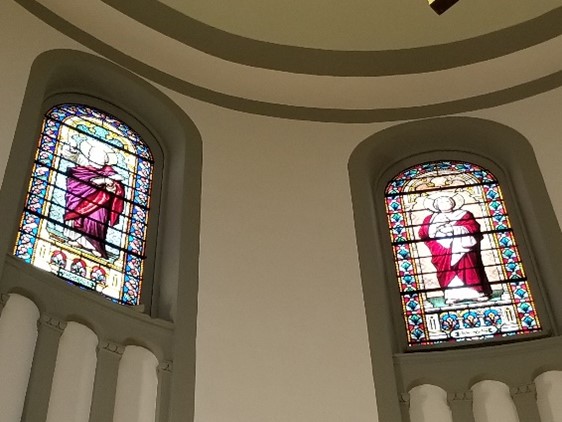
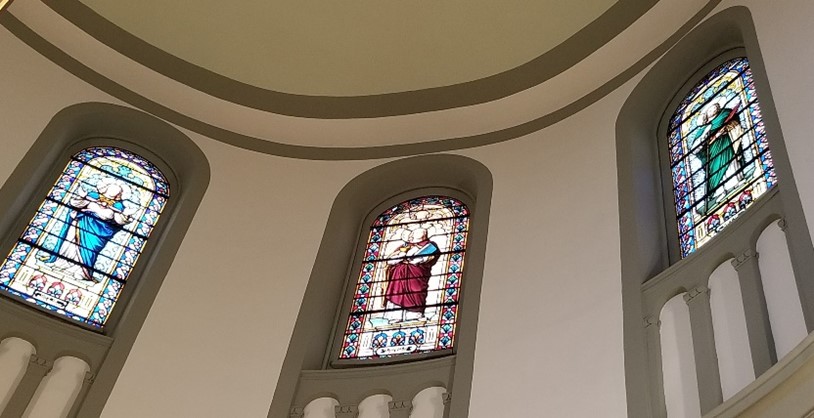
The windows in this apse show Christ surrounded by his inner circle of Peter, John, and James (the apostles with him for the raising of Jairus’s daughter, his Transfiguration, and his agony in Gethsemane), and Paul, the Apostle to the Gentiles. Window details include the names of donors and honorees. From left to right, the windows show:
St. Peter’s welcomes CHRS tour-goers for glimpse of parish history
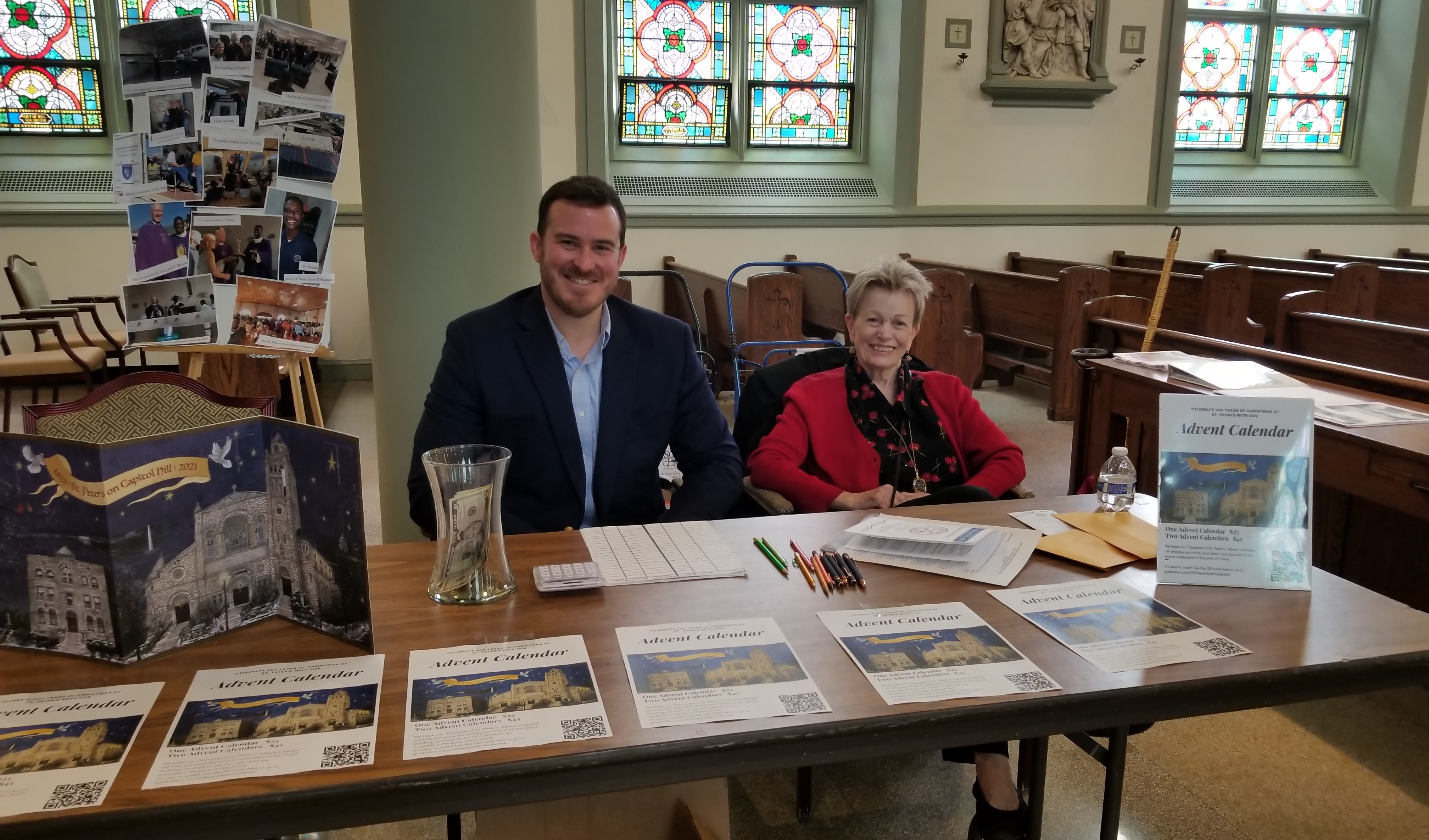
Allen Souza and Mary Lynn Stevens sell Bicentennial Advent calendars during church and rectory tours given by St. Peter’s parishioners for the Capitol Hill Restoration Society’s 65th Annual House and Garden Tour on May 8. About 140 visitors learned about the architecture of St. Peter’s three churches and three rectories, as well as their many decorative elements.
An Eventful 35 Years: Rev. James M. O’Brien (1888-1922)
When Fr. James O’Brien arrived as St. Peter’s new pastor in April 1888, we have to hope he was ready to hit the ground running. Fund raising for a new church building was already underway, and demolition of the existing church began just a year later. In the three decades to follow, he would oversee significant changes to the physical plant as well as two major anniversaries of the parish.
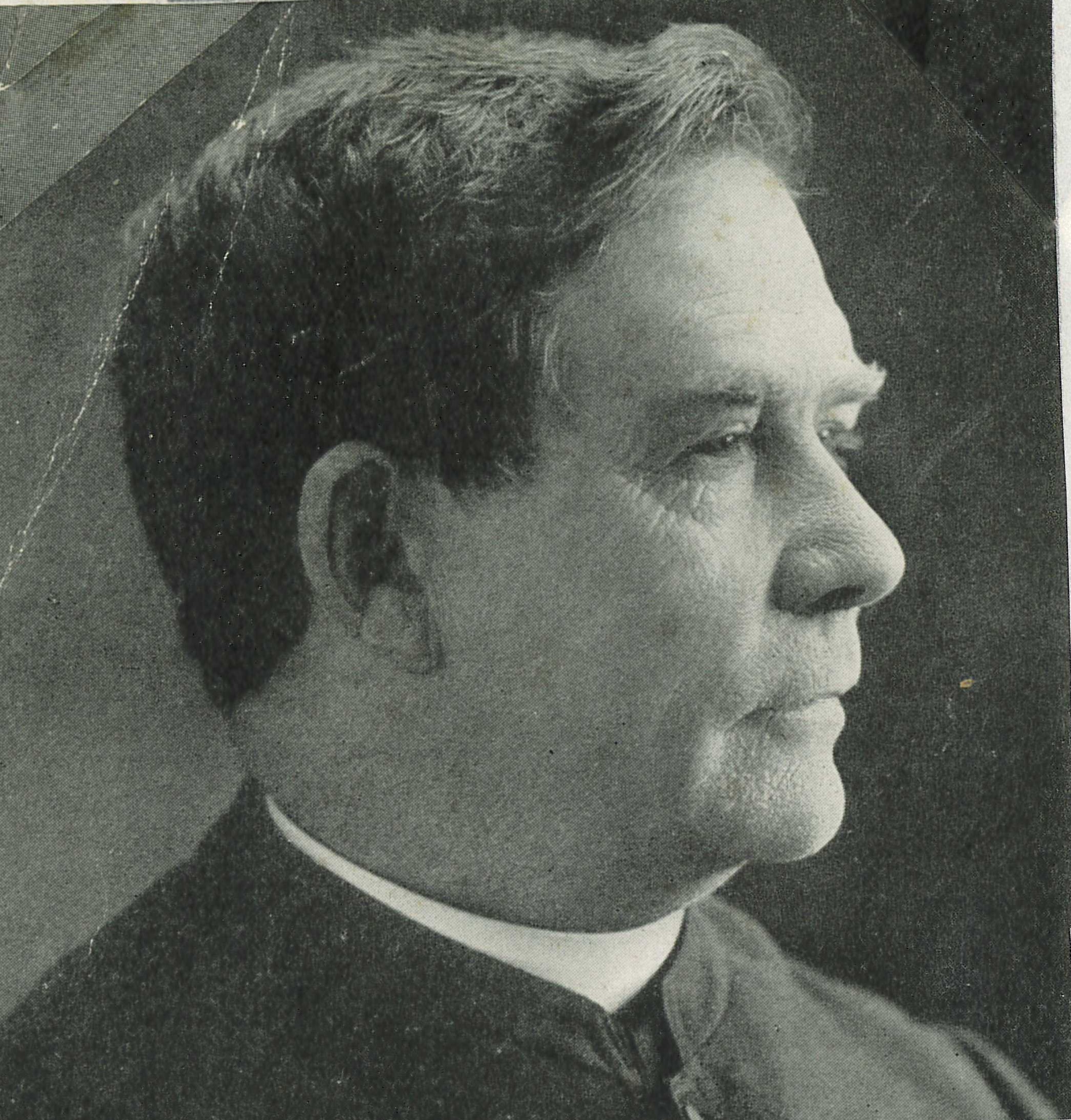 The church Fr. O’Brien inherited was by then 67 years old and no longer adequate for a growing parish. The advent of a new church was evidently cause for great celebration, and not just in the parish: At a ceremony on September 15, 1889, a parade marched from McPherson Square to St. Peter’s where Cardinal James Gibbons presided over the laying of the cornerstone, to music by the Marine Band conducted by John Philip Sousa.
St. Peter’s held 1983 debate on nuclear freeze, peace pastoral
“Bishops’ Nuclear Arms Letter Divides Catholic Lay Panel at Forum” read the headline in the New York Times. The story in the Catholic Standard said, “If the panel discussion at St. Peter’s is any indication, consensus will be difficult to attain.”
On May 10, 1983, the parish hosted a forum titled “The Bishops Pastoral Letter: What Will It Mean?” It was just a week after the U.S. Catholic bishops voted in Chicago to accept their controversial pastoral letter “The Challenge of Peace: God’s Promise and Our Response.” The final document called for a halt to the testing, production, and deployment of new nuclear weapons.
CHRS house tour includes St. Peter's on May 8
St. Peter’s will be part of the Capitol Hill Restoration Society’s 65th Annual House and Garden Tour on Mother’s Day weekend, May 7-8. This popular spring event on Capitol Hill began in 1958. St. Peter’s has been on the tour before, and is appearing again because of its milestone Bicentennial.
Our Twin Parish in Haiti: A Friendship of Nearly 15 Years
St. Peter’s relationship with Notre Dame d’Altagrace, our twin parish in Haiti, began with a plea from a desperate priest.
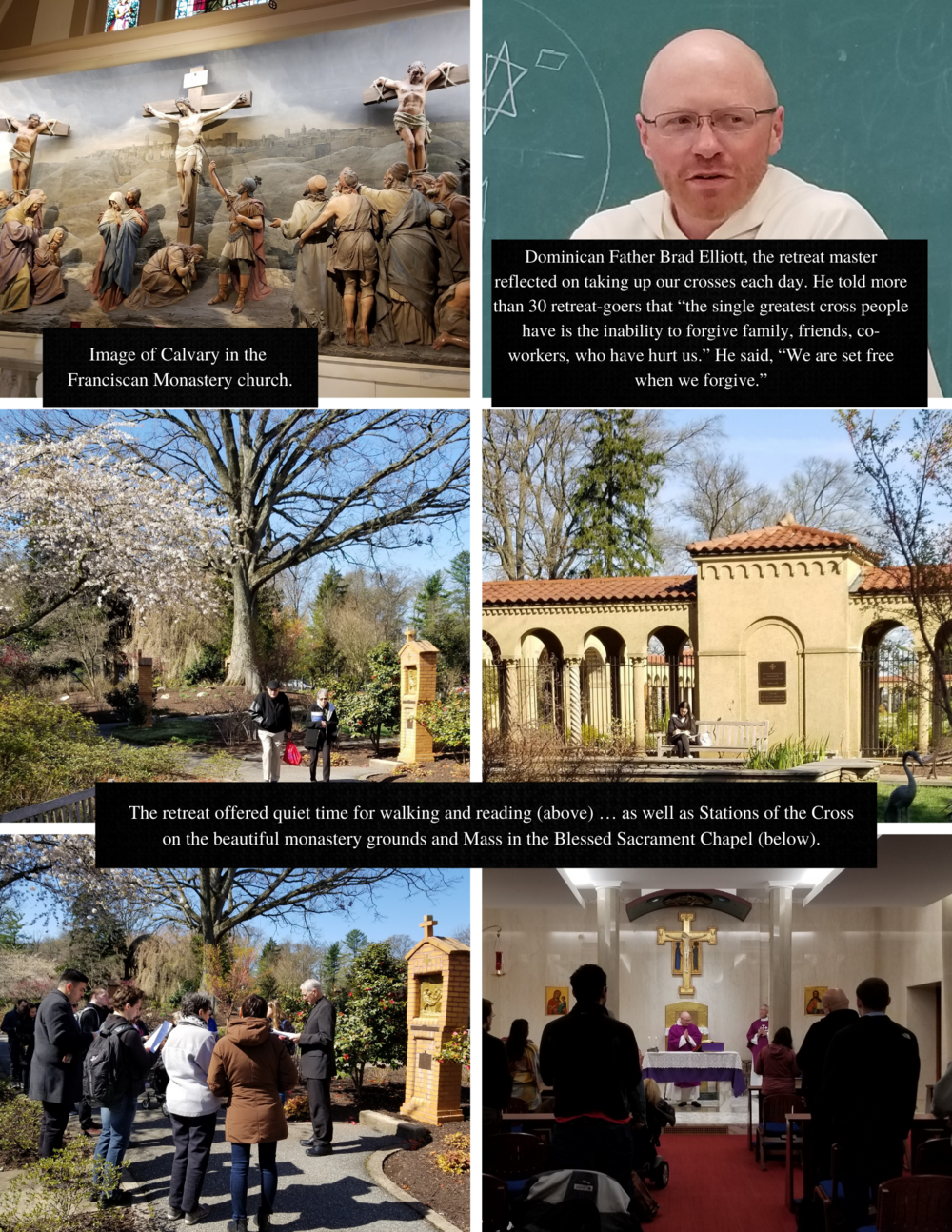
April 2 Retreat at Franciscan Monastery: Take Up Your Cross Daily
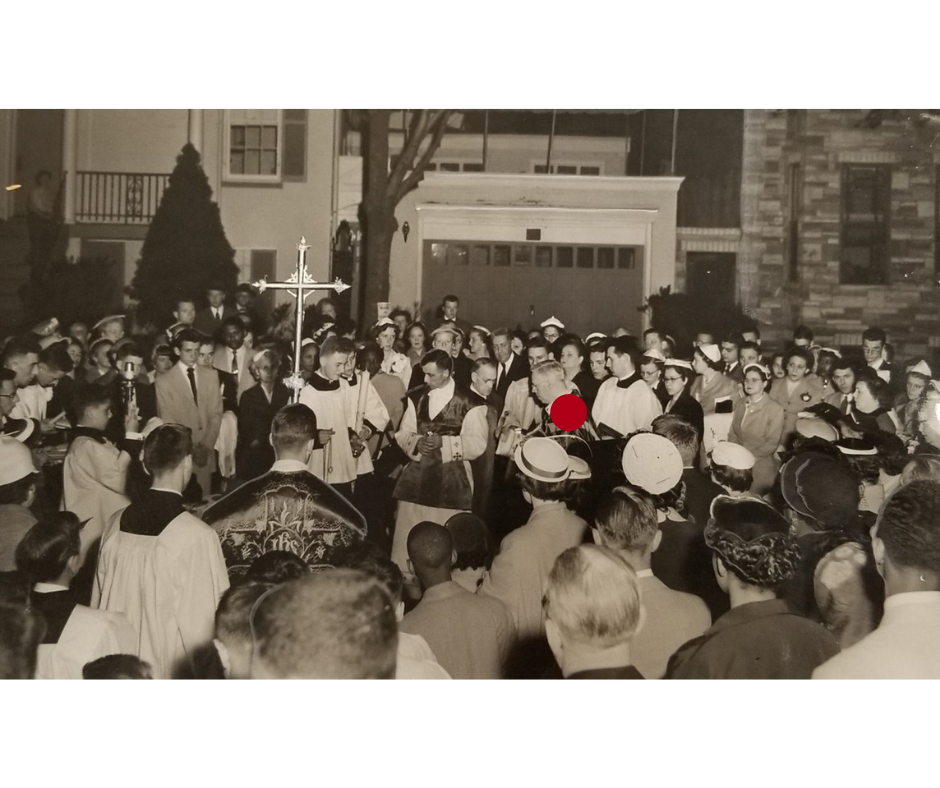
Easter 1955
Easter 1955 (from the Catholic Standard Archives; reprinted with permission)
Two 19th-Century Pastors: A Builder, A Bishop
Rev. Edward A. Knight (1851-62)
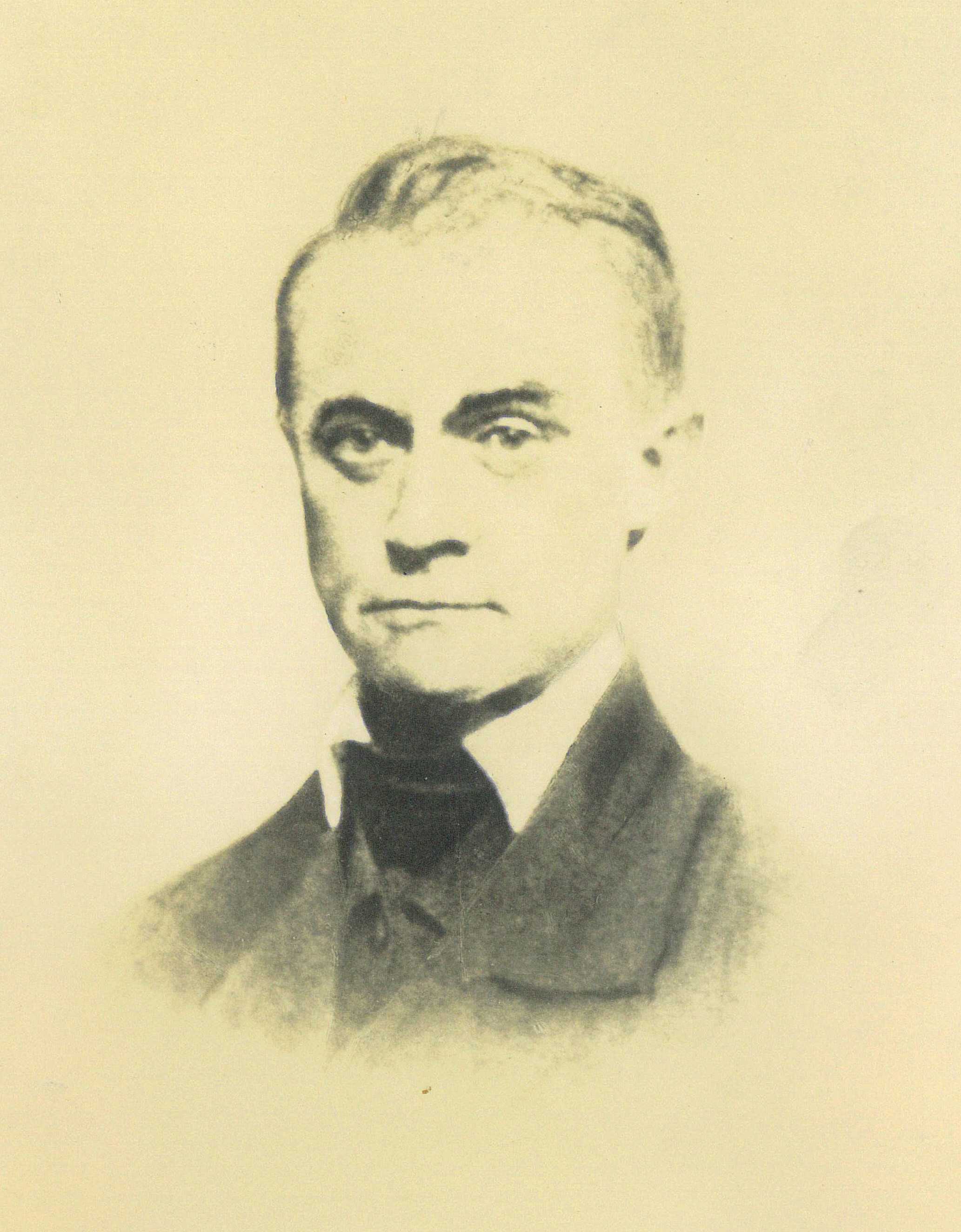 A new church in a young city, the first St. Peter’s was a modest building, and remained so through its first decades. That changed with the arrival in 1851 of Father Edward Knight, St. Peter’s eighth pastor.
From the Catholic Standard Archives, July 18, 1985 (reprinted with permission): Ukrainian-Russian Connection
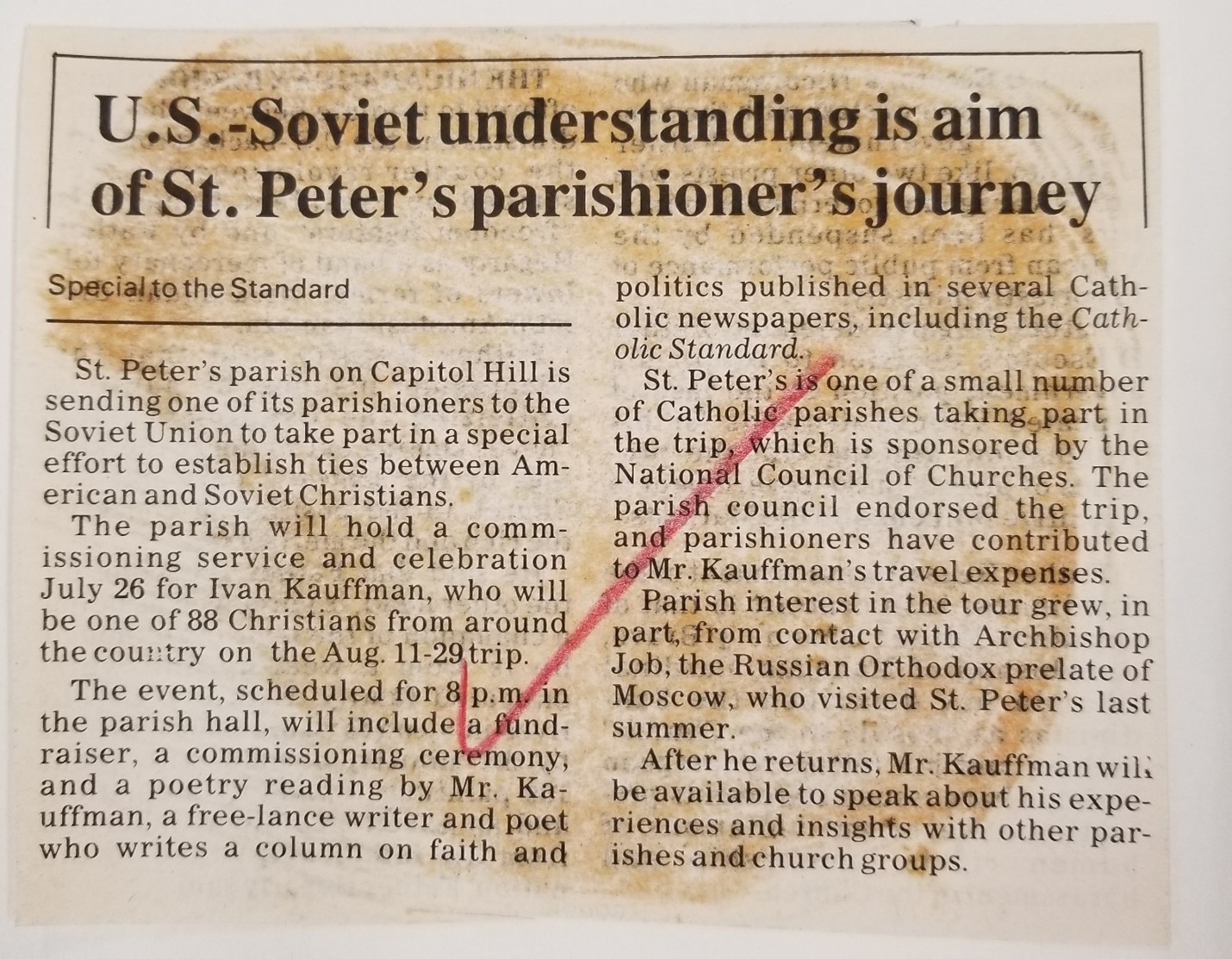 Former St. Peter’s parishioner Ivan Kauffman, who died in Philadelphia in 2015, gave the parish a link to Ukraine and Russia with this 1985 trip. On the journey, Ivan also visited St. Peter the Apostle Roman Catholic Church in Odessa, Ukraine. When he returned from the trip, Ivan spoke in the church hall about how warmly the people of St. Peter’s in Odessa had received the group and especially him, a parishioner at another church dedicated to St. Peter.
Racial Justice Event Looks to the Future
Racial justice event looks to the future
As part of its yearlong Bicentennial celebration, St. Peter’s will host a racial justice event Saturday, March 26, beginning with Mass at 5 p.m. in the church, followed by a simple meal and discussion in the hall led by Msgr. Raymond East, pastor of St. Teresa of Avila Parish in Southeast DC.
St. Peter's Annual Celebration of Ireland
This story ran in the parish newsletter in 2003. The annual Celebration of Ireland had a 29-year run, 1991-2019. Two of its organizers have died, Fr. Michael O’Sullivan in 2013 and Eileen Nolan in 2017. Parishioner David Butler coordinated the celebration for its last eight years.
Crafting a Parish Mission Statement
One of the tasks taken up by the parish council in its early years was to write a mission statement, one that could guide St. Peter’s into the future. Here, Jerry Conlon and Marlene Desmond, who were on the council then, recall the group’s deliberations:
After Vatican II, a Parish Council for St. Peter’s
Among the things to come out of Vatican II was the recommendation that pastors establish lay councils to assist in the work of the parish. Here, longtime parishioners Pat Nishimoto and Anne Kraemer share their memories of that time at St. Peter’s.
Pat Nishimoto: When my father, John Curran, was asked to be the first president of the new parish council, he was very honored. He had been an active member of St. Peter's beginning in the 1960s. Of particular importance to him was the St. Vincent de Paul Society. At this time, in the late 60s and early 70s, the reforms of Vatican II were being implemented all over the United States, including Masses in English and the creation of parish councils to make the Church more tangible to the laity. It was an exciting time to be a Catholic.
Elevator Installation
From the Catholic Standard Archives, June 25, 1992 (reprinted with permission): Elevator Installation
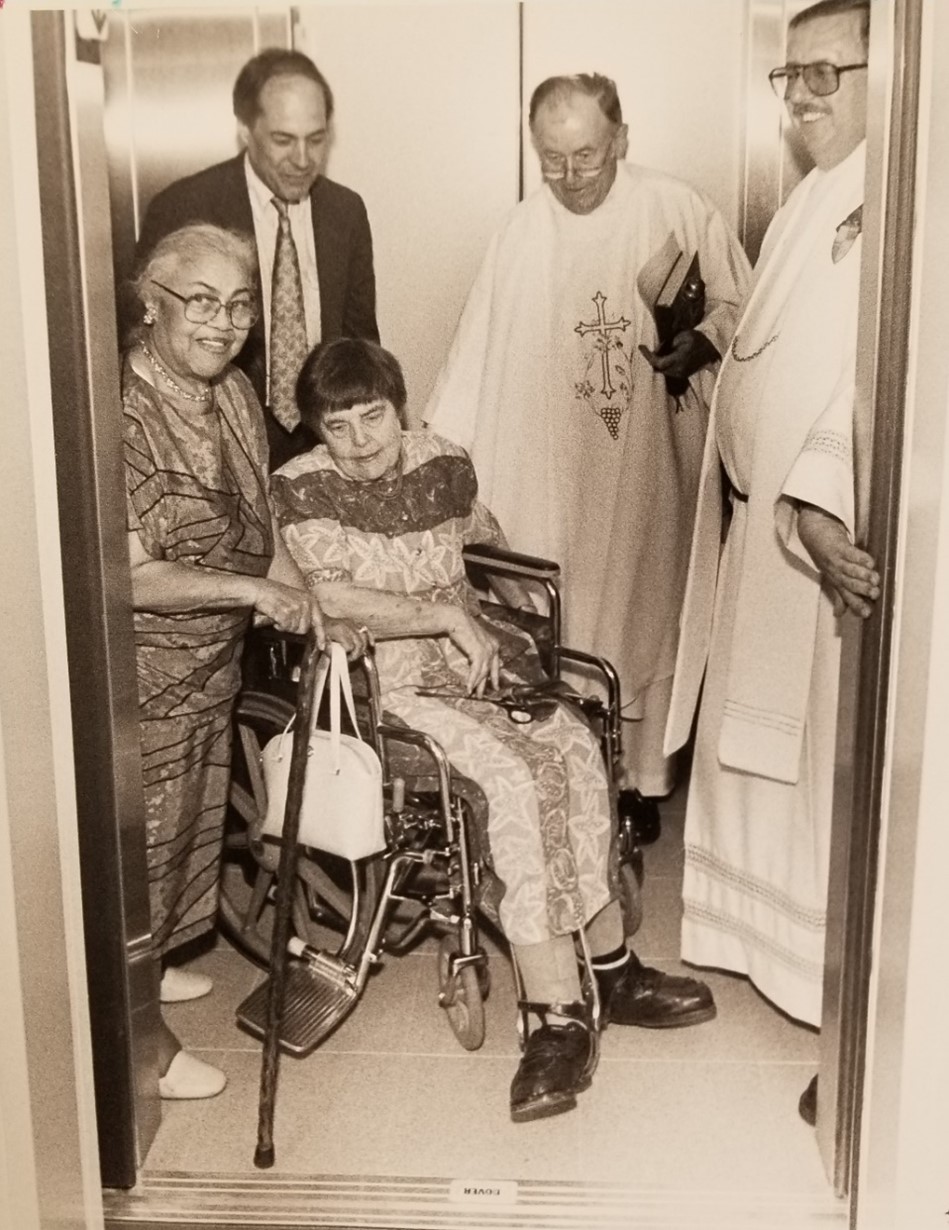
Helen Atkins (left) and Margaret Klapthor (in wheelchair) are the first passengers in the new elevator built at St. Peter’s Church, S.E. Architect Andre Houston, Father Michael O’Sullivan, pastor at the parish, and Father Joseph Sadusky, in residence at the parish, join in the ceremony making the historic church more accessible to the handicapped.
In the Catholic Standard article that ran with this photo, elevator architect and now-deceased St. Peter’s parishioner Andre (Andy) Houston said of the celebration that marked the 1992 installation: